
A Duel Between Giants
What’s going on between Arturo Pérez-Reverte and David Uclés?

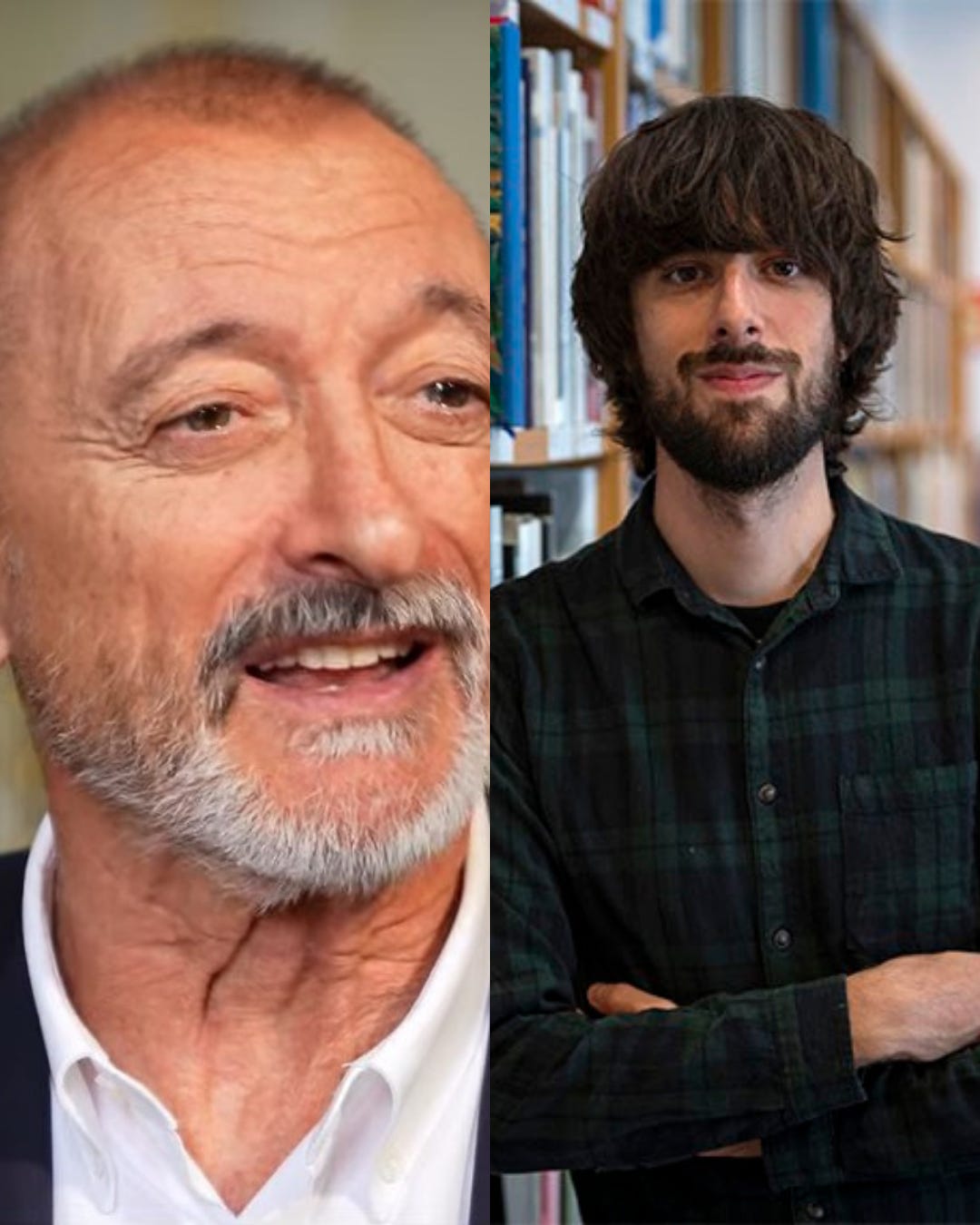
What began as a literary event intended to encourage reflection on Spain’s Civil War has turned into one of the most revealing cultural controversies of recent years, exposing not only a clash of personalities but a deeper disagreement about history, politics and the responsibilities of writers in contemporary Spain.
The protagonists are two figures at very different points in their careers: Arturo Pérez-Reverte, one of Spain’s best-known novelists and a member of the Royal Spanish Academy and David Uclés, a younger author whose reputation has surged after winning the Premio Nadal in 2026. Their public falling-out has sparked intense debate well beyond literary circles.
The immediate trigger was a series of talks scheduled for late January in Seville as part of the cultural programme Letras en Sevilla. Curated by Pérez-Reverte and journalist Jesús Vigorra, the event was titled “1936: La guerra que todos perdimos” (“1936: The war we all lost”) and was conceived to coincide with the approaching 90th anniversary of the outbreak of the Spanish Civil War. According to its organisers, the aim was to host a broad discussion about the conflict’s long shadow over Spanish society. David Uclés had initially agreed to take part.
Uclés later withdrew and his reasons quickly became public. He objected both to the title of the event and to the presence of certain invited speakers. In his view, describing the Civil War as “the war we all lost” was not a neutral formulation but a politically loaded one, blurring responsibility and flattening historical distinctions. He also expressed discomfort at sharing a platform with political figures such as former prime minister José María Aznar and former Vox spokesman Iván Espinosa de los Monteros. Speaking on Spanish radio and television, Uclés insisted his decision was not personal. “Arturo, don’t take it personally,” he said, adding that he was acting according to his conscience and long-held beliefs about how Spain’s past should be discussed.
Pérez-Reverte did take it personally and he didn’t hide it. He accused Uclés of turning a cultural disagreement into a political performance and of withdrawing in a way he considered discourteous. His reaction escalated quickly. In statements to the press, Pérez-Reverte described Uclés’ behaviour as “infantile” and “pitiful”, and went so far as to announce that Uclés would not be welcome at future editions of Letras en Sevilla. “David Uclés will not return here,” he said. “He has discredited himself, and we do not want him discrediting Letras en Sevilla with his presence.”
The dispute did not remain confined to the two writers. As criticism mounted on social media and in opinion columns, several other participants pulled out of the event. Organisers cited growing tensions and even threats of protests from extremist groups as reasons for postponing the talks. Eventually, the entire programme was suspended and rescheduled for October. Pérez-Reverte framed the cancellation as a symptom of a wider problem, lamenting what he described as the near-impossibility of “reasonable dialogue” in Spain’s current political climate.
Uclés, meanwhile, stood firm. He stated publicly that he would make the same decision again and expressed concern about the scale of the backlash against him, noting that dozens of columns had been written criticising him personally. He also responded pointedly to the cancellation of the event, saying that seeing people challenge rhetoric that, in his view, whitewashes Francoism felt like a moral victory. The tone was defiant rather than conciliatory.
As the controversy grew, it took on an almost symbolic dimension. Pérez-Reverte attempted to broaden the debate by inviting figures from the opposite end of the political spectrum, including former Podemos leader Pablo Iglesias, who declined with irony. At the same time, Pérez-Reverte circulated older statements by Uclés about the Civil War, suggesting that the younger writer had previously expressed ideas not unlike those implied by the disputed title and accusing him of inconsistency. Supporters of Uclés countered that positions evolve and that refusing a particular platform is itself a legitimate political and ethical act.
The importance of this episode seems to lie not in the personal animosity but in showing once again that the Civil War remains a raw subject nearly ninety years on, even in the context of a literary festival.
Sadly as an outsider, seem like the same kind of disagreement that weakened the broad 'left' at the start of the war. Currently reading ' The Forging of a rebel' and it seems not much has changed.
Appreciate the nice clear breakdown 🙏 El pacto del olvido is and always will be a tricky one it seems