
Revisiting 'Sepharad'
How Antonio Muñoz Molina's masterpiece of memory, displacement and moral witness remains as urgent today as when it was first published. By Brett Hetherington.

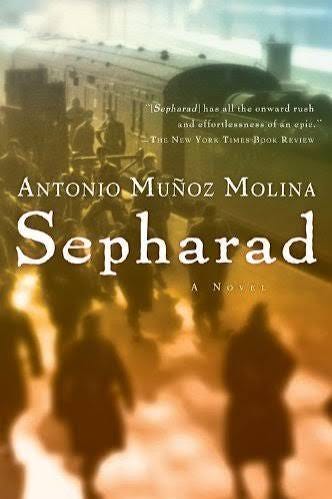
In Muñoz Molina’s sweeping work, translated superbly by Margaret Sayers Peden, he both invents leading characters as well as taking them from real life. This includes the authors Franz Kafka and the Italian genius Primo Levi.
His greatest skill is in capturing both the fever of hope and fear that permeated so much of Jewish life in the 20th century but also the specific taste of refugees’ fear. Even the first page of the book gushes over types of special food, suggesting the delight and primacy of escaping from hunger.
Like so many fine writers (here, Bob Dylan also comes to mind,) Muñoz Molina is unafraid of borrowing and quoting others. “On a certain street there is a certain heavy door, says one of Borges’s poems…” He has a rare ability to successfully intertwine the distant past with the near present so that we feel somehow familiar with those who his stories deal with. Muñoz Molina has lived a degree of the universal “uprootedness and foreignness” he explores so deftly, having been an immigrant in the USA himself.
Most of this author’s work treats or uses the crucial element of memory. By the end of the book, the Spanish author’s writing had left his “musical embers” in me. I clearly knew his literary voice and when I heard him inter-viewed on a podcast months later he sounded confident, thoughtful and gentle; very much like I had expected.
Talking about Sepharad, Muñoz Molina said, “I have invented very little in the stories and voices that weave through this book.” According to critic Michael Steinmetz “in 17 chapters linked by theme and subject, readers meet [people] in the shadow of the Holocaust and the regimes of Stalin and Franco. In “Copenhagen,” Muñoz Molina reflects on the relationship between narrative and travel...In “Silencing Everything,” a man from Madrid recalls his experiences as a soldier in Russia during WWII, and in “Sacristan,” a man who left his small village for the city mourns the changes in his childhood home. The author himself appears as a character, a man in exile from his own life, drowning in his search for stories: “I have flirted,” he says, “with the idea of writing a novel, imagined situations and places, like snapshots….”
On a theme closely related to the religion of the main protagonists, I was relieved to see that in his column in El Pais newspaper Muñoz Molina has been critical of Israel’s genocide in Palestine and has recently empathised with the UN’s Francesa Albanese. This is despite the fact that Sepharad won the Jerusalem Prize “for the Freedom of the Individual in Society” in 2013.
Last year he said, when looking at contemporary society, “the fiction that immigrants are invading us and will Islamize Spain and Europe [is] a delusional and destructive fiction that convinces millions…We are experiencing the mixture of a reactionary wave and the machinery of deception, [a kind of] elimination of reality. There is a toxic mix between the most primitive instincts and these terrifying forces.”
Clearly, Sepharad’s themes, a quarter of a century later, are as relevant as ever today and just as close to fact, as fiction.
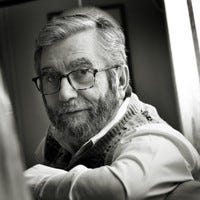
On a personal note, Sepharad includes a fair number of important train travel scenes and was in fact a major influence that I used for inspiration and reference in my recent travelogue “Slow Travels in Unsung Spain.”
Muñoz Molina’s original hometown of Ubeda in Andalusia was the return point I used for my main journey through Spain’s interior:
“...I had a destination in mind. Almost nine hundred kilometres away [from my home in rural Catalonia,] I imagined the town called Ubeda as old, dusty, white and dry, and I planned it to be my turning circle, after which I would head home.
Ubeda was somewhere I had never been before. It’s the hometown of Antonio Muñoz Molina, a Spanish writer I greatly admire. Amongst other desires, I had a question about him that I wanted to try to get an answer for. Could I recognise if the town of his upbringing had affected his novels? One of the reasons I wrote the book was this man, a great but under-rated author. In Andalucia’s Ubeda, I talked to one of his family then turned and headed back to my own home in Catalonia. The long way.”
BIO
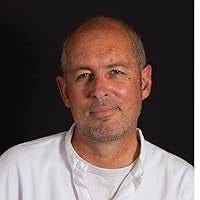
Brett Hetherington is the author of the non-fiction books “Slow Travels in Unsung Spain” and “The Remade Parent.”
He has been a regular commentator on Spain’s social and cultural issues for Australia’s ABC Radio and a long-time opinion columnist and reviewer for Catalonia Today magazine.
Brett is also a freelance writer, translator and teacher. Some of his work has appeared in Monocle guides, The Australian Journalism Review, Barcelona Metropolitan and Reportage magazine.
He has lectured at The University of Barcelona and was chosen as a 2024 UNESCO World City of Literature Virtual Writer in Residence for Melbourne, Australia.
Since 2006, Brett has lived with his partner/wife Paula close to their now young-adult son Hugo in Catalonia’s Barcelona region.
SOCIALS
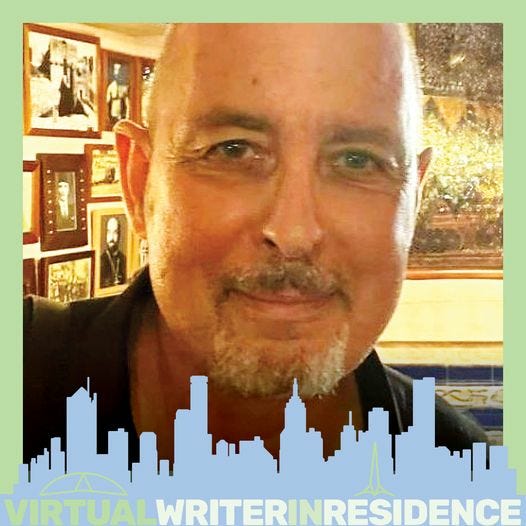
https://bretthetherington.net/
 | A guest post by
|
Hola , Leí Hace Muchos Años El Libro De Antonio Muñoz Molina "Sepharad " , El Libro Contiene Muchos Aspectos Relacionados Con Mí Familia , Mí Abuelo Lucho En La Guerra Civil Española 1936-39 Y En La Segunda Guerra Mundial 1940-45 , Estuvo En Dos Campos De Concentración Nazi , En Uno De Ellos Conoció A Mí Abuela. También Liberó La Ciudad De París Con La Compañía N9 , Estuvo Exiliado Mas De 40 Años Etcétera. Un Saludo.